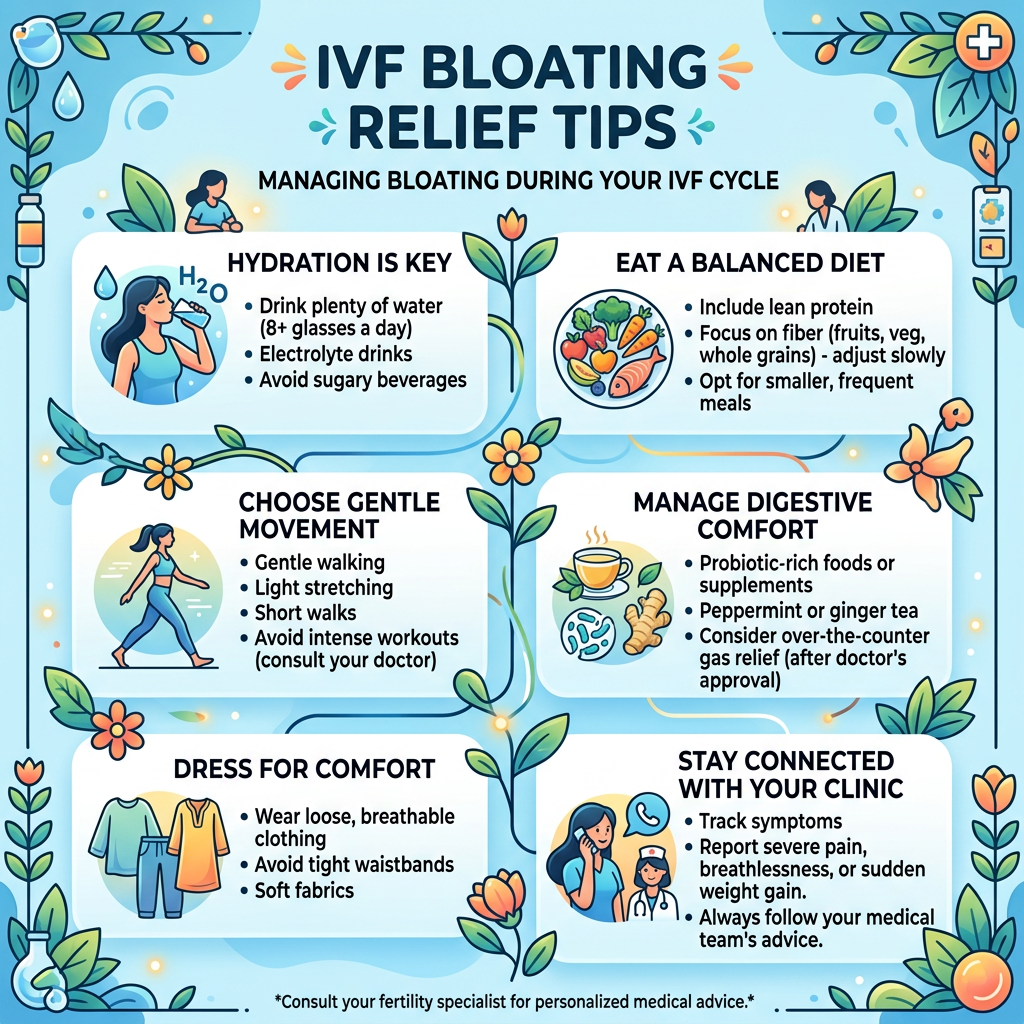
Bloating is one of the most common and uncomfortable side effects during IVF treatment. Many women experience abdominal fullness, pelvic pressure, tight clothing, and digestive discomfort during ovarian stimulation, after egg retrieval, and sometimes even during the embryo transfer phase. While IVF bloating is usually temporary, it can still feel physically and emotionally exhausting during fertility treatment.
The good news is that there are several gentle ways to help manage IVF bloating and improve comfort during your IVF journey. While you may not be able to eliminate bloating completely, small lifestyle habits and supportive self-care routines may help reduce discomfort during treatment.
This beginner-friendly guide explains why IVF bloating happens, when it is considered normal, and practical IVF bloating relief tips that may help during fertility treatment.
Why Does IVF Cause Bloating?
IVF bloating mainly happens because fertility medications stimulate the ovaries to grow multiple follicles.
As the ovaries enlarge during ovarian stimulation:
- The abdomen may feel swollen
- Fluid retention may increase
- Digestion may slow down
- Pelvic pressure may develop
Hormonal changes during fertility treatment can also contribute to:
- Constipation
- Water retention
- Digestive discomfort
- Feeling physically heavy
Bloating is especially common:
- During ovarian stimulation
- After egg retrieval
- During progesterone support
Is IVF Bloating Normal?
Mild to moderate bloating during IVF is extremely common.
Many women experience:
- Tightness in the abdomen
- Mild swelling
- Pelvic heaviness
- Temporary weight gain from fluid retention
- Feeling full quickly
However, severe bloating combined with symptoms like shortness of breath or rapid weight gain should always be reported to your fertility clinic because it could signal ovarian hyperstimulation syndrome (OHSS).
1. Drink More Fluids, Not Less
Many women assume bloating means they should drink less water, but hydration is actually very important during IVF.
Proper hydration may help:
- Support circulation
- Improve digestion
- Reduce constipation
- Help manage fluid balance
Helpful hydration options during IVF include:
- Water
- Coconut water
- Electrolyte drinks
- Broths
- Herbal teas
Some fertility clinics specifically encourage electrolyte intake during ovarian stimulation.
2. Increase Electrolytes During IVF
Electrolytes may help support fluid balance during fertility treatment.
Helpful electrolyte sources include:
- Coconut water
- Electrolyte powders
- Broths
- Bananas
- Sports drinks in moderation
Many women report feeling physically better when hydration includes electrolytes rather than plain water alone.
3. Focus on Protein-Rich Foods
Protein is commonly recommended during IVF stimulation because it may help support fluid balance and recovery.
Helpful IVF protein foods include:
- Eggs
- Greek yogurt
- Cottage cheese
- Lentils
- Tofu
- Chicken
- Salmon
- Protein smoothies
Protein-rich meals may also help maintain stable energy levels during fertility treatment.
4. Wear Loose and Comfortable Clothing
As ovarian stimulation progresses, tight clothing may become uncomfortable quickly.
Helpful IVF comfort tips include:
- Loose dresses
- Stretchy leggings
- Soft waistbands
- Comfortable pajamas
Many women feel significantly more physically comfortable simply by avoiding restrictive clothing during IVF treatment.
5. Try Gentle Walking
Gentle movement may help improve circulation and digestion during IVF stimulation.
Short walks may help:
- Reduce stiffness
- Support digestion
- Improve circulation
- Relieve mild bloating discomfort
However, intense exercise is usually restricted during ovarian stimulation because enlarged ovaries may become uncomfortable or increase the risk of ovarian torsion.
Always follow your fertility clinic’s exercise recommendations.
6. Reduce Highly Processed and Salty Foods
Highly processed foods and excess sodium may worsen water retention during IVF treatment.
Foods that may increase bloating for some women include:
- Fast food
- Fried foods
- Excess salty snacks
- Highly processed meals
Instead, many women feel better focusing on:
- Whole foods
- Lean protein
- Fruits and vegetables
- Fiber-rich foods
- Hydrating meals
Perfection is not necessary during IVF, but balanced nutrition may help improve comfort.
7. Manage Constipation During IVF
Constipation is extremely common during fertility treatment because of:
- Hormonal medications
- Reduced movement
- Progesterone
- Stress
Constipation can make IVF bloating feel much worse.
Helpful Constipation Relief Tips
Consider increasing:
- Water intake
- Fiber
- Fruits
- Vegetables
- Oats
- Whole grains
- Gentle movement
Some women also benefit from warm herbal teas or discussing safe stool softeners with their fertility clinic.
8. Use Heat Carefully if Approved by Your Clinic
Some women find gentle warmth comforting for pelvic pressure or cramping.
Examples may include:
- Warm blankets
- Warm showers
- Mild heating pads
However, always ask your fertility clinic before using heating pads directly on the abdomen during fertility treatment.
9. Eat Smaller Meals More Frequently
Large meals may worsen bloating during ovarian stimulation.
Smaller meals throughout the day may feel easier on digestion.
Helpful IVF meal ideas include:
- Smoothies
- Yogurt bowls
- Soups
- Protein snacks
- Rice and vegetables
- Oatmeal
Eating slowly may also help reduce digestive discomfort.
10. Prioritize Rest During IVF Stimulation
The body works extremely hard during ovarian stimulation.
Fatigue and bloating often increase together during fertility treatment.
Rest may help support:
- Recovery
- Emotional well-being
- Physical comfort
- Stress reduction
Many women feel pressure to continue functioning normally during IVF, but slowing down is often helpful during this stage.
11. Sleep With Extra Pillow Support
Some women feel more comfortable sleeping with:
- Pillows under the knees
- Side sleeping positions
- Slight upper-body elevation
Comfortable sleep positioning may help reduce abdominal pressure during IVF stimulation.
12. Reduce Stress Around Body Changes
IVF bloating can sometimes feel emotionally upsetting because the body changes quickly during fertility treatment.
You may feel:
- Uncomfortable in clothes
- Self-conscious
- Frustrated by swelling
- Emotionally overwhelmed by physical symptoms
It is important to remember:
- IVF bloating is temporary
- Hormonal shifts are normal
- Your body is working extremely hard during treatment
Being compassionate with yourself matters during fertility treatment.
Warning Signs: When to Call Your Fertility Clinic
While mild bloating is common during IVF, severe symptoms should always be reported immediately.
Contact your fertility clinic if you experience:
- Rapid weight gain
- Severe abdominal pain
- Shortness of breath
- Severe nausea or vomiting
- Difficulty urinating
- Extreme swelling
These may be signs of ovarian hyperstimulation syndrome (OHSS), which requires medical attention.
Final Thoughts on IVF Bloating Relief
IVF bloating is one of the most common side effects during fertility treatment, especially during ovarian stimulation and after egg retrieval. While bloating can feel uncomfortable and emotionally frustrating, hydration, electrolytes, protein intake, gentle movement, rest, and supportive self-care habits may help improve comfort throughout your IVF journey.
Remember:
- Mild bloating during IVF is very common
- Hydration and electrolytes matter
- Gentle movement may help
- Rest is important during stimulation
- Severe symptoms should always be reported to your fertility clinic
Most importantly, be patient and compassionate with yourself during fertility treatment. Your body is going through significant hormonal and physical changes, and caring for yourself gently during the IVF process matters just as much as the medical side of treatment.
Leave a Reply