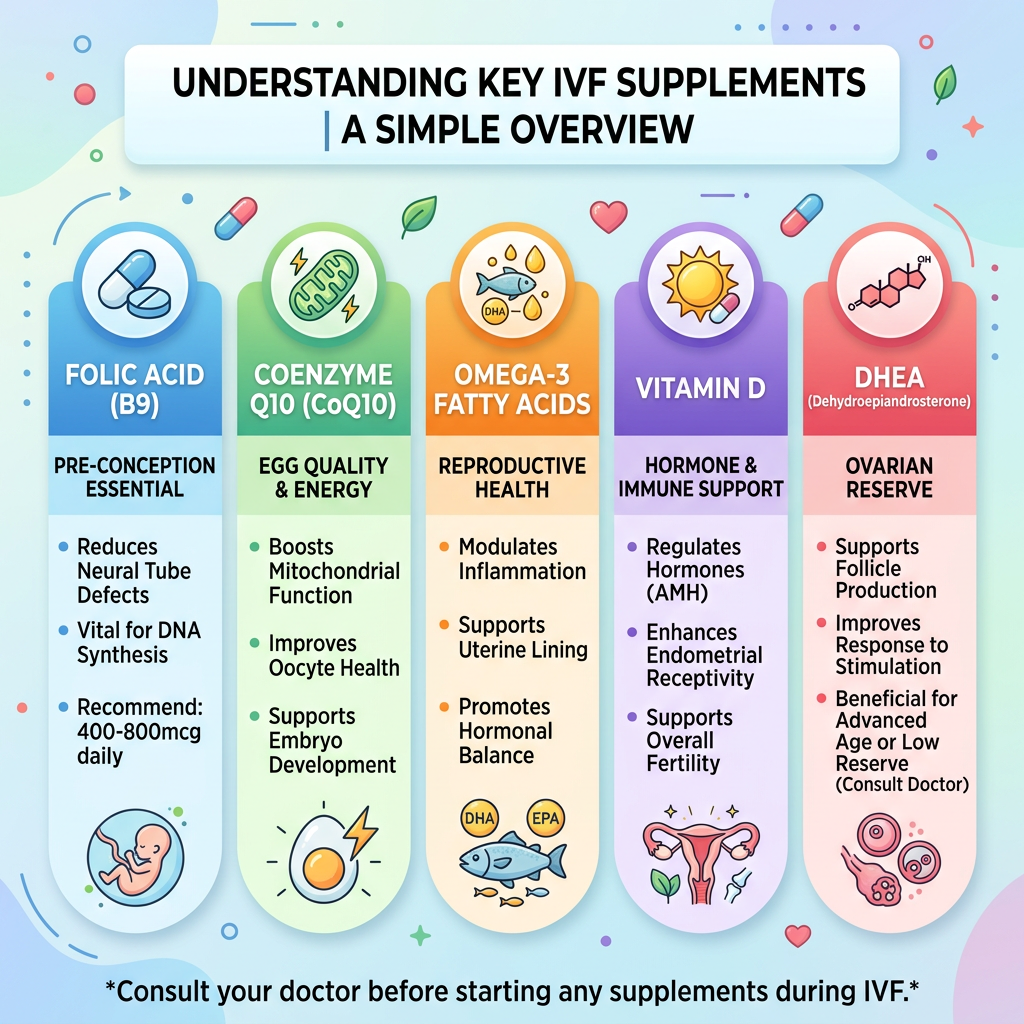
When preparing for fertility treatment, many women start researching IVF supplements to support egg quality, hormone health, implantation, and overall fertility wellness. However, the world of fertility supplements can quickly become overwhelming. Between prenatal vitamins, CoQ10, vitamin D, omega-3s, and countless online recommendations, many IVF patients feel confused about what supplements are actually useful and which ones may not be necessary.
The good news is that IVF supplements do not need to feel complicated. Understanding the basics can help you have more informed conversations with your fertility clinic and reduce unnecessary anxiety during treatment.
This beginner-friendly guide explains common IVF supplements in simple terms, why fertility clinics may recommend them, and important things to know before starting supplements during IVF.
Why Supplements Are Used During IVF
IVF supplements are often used to help support:
- Egg quality
- Hormone balance
- Nutrient levels
- Reproductive health
- Early pregnancy preparation
- Overall wellness during fertility treatment
However, supplements are not magic solutions or guaranteed IVF success tools.
Fertility outcomes depend on many factors, including:
- Age
- Embryo quality
- Genetics
- Ovarian reserve
- Uterine health
- Overall reproductive health
Supplements are generally meant to support the body — not replace medical fertility treatment.
Important Reminder Before Taking IVF Supplements
Before starting any supplement during fertility treatment, always speak with your:
- Fertility doctor
- Reproductive endocrinologist
- Healthcare provider
Some supplements may:
- Interfere with medications
- Affect hormone levels
- Be unnecessary for your situation
- Require specific dosing
Every IVF treatment plan is different.
1. Prenatal Vitamins During IVF
Prenatal vitamins are one of the most commonly recommended fertility supplements.
Most fertility clinics suggest starting prenatal vitamins before:
- IVF cycles
- Embryo transfer
- Pregnancy attempts
Why Prenatal Vitamins Matter
Prenatal vitamins often contain:
- Folate or folic acid
- Iron
- Calcium
- Vitamin D
- Essential nutrients for pregnancy support
Folate is especially important because it helps support early fetal development.
Prenatal vitamins are generally considered foundational supplements during fertility treatment.
2. CoQ10 Explained Simply
CoQ10, or Coenzyme Q10, is one of the most discussed IVF supplements online.
CoQ10 helps support:
- Cellular energy production
- Mitochondrial function
Because eggs require significant energy for development, some fertility specialists recommend CoQ10 for egg quality support.
Who May Be Recommended CoQ10?
CoQ10 is often discussed for:
- Advanced maternal age
- Diminished ovarian reserve
- Egg quality concerns
However, supplement recommendations vary greatly depending on individual fertility situations.
3. Vitamin D and Fertility
Vitamin D plays a role in many body functions, including reproductive health.
Many fertility clinics check vitamin D levels during fertility testing because low levels are common.
Why Vitamin D Matters During IVF
Vitamin D may support:
- Hormone regulation
- Immune health
- Overall reproductive wellness
If levels are low, fertility clinics may recommend vitamin D supplementation.
However, taking excessive vitamin D without medical guidance is not recommended.
4. Omega-3 Supplements During Fertility Treatment
Omega-3 fatty acids are healthy fats commonly found in:
- Fish oil
- Salmon
- Sardines
- Flax seeds
- Chia seeds
Some fertility specialists recommend omega-3s because they may support:
- General health
- Hormone function
- Anti-inflammatory balance
Omega-3 supplements are often included as part of overall wellness support during IVF treatment.
5. Iron Supplements During IVF
Iron supports:
- Oxygen transport
- Energy levels
- Blood health
Some women undergoing fertility treatment may have low iron levels, especially if they experience:
- Heavy menstrual cycles
- Fatigue
- Iron deficiency anemia
Iron supplements should usually only be taken if recommended by a healthcare provider because excessive iron can also create problems.
6. Myo-Inositol for PCOS
Myo-inositol is a supplement frequently discussed in fertility treatment for women with PCOS.
Some fertility specialists use it to support:
- Insulin sensitivity
- Hormonal balance
- Ovulation support
PCOS-related fertility plans vary widely, so supplementation recommendations are individualized.
7. DHA During Fertility Treatment
DHA is a type of omega-3 fatty acid often included in prenatal supplements.
DHA may support:
- Brain development during pregnancy
- Overall prenatal nutrition
Some fertility clinics encourage DHA as part of preconception care.
8. Magnesium and Stress Support
Magnesium is sometimes discussed during IVF because stress and anxiety may affect:
- Sleep
- Muscle tension
- Relaxation
Some women use magnesium supplements to support:
- Sleep quality
- Relaxation
- General wellness
However, supplement dosing should still be discussed with a healthcare provider.
9. Antioxidants and Fertility Supplements
Many fertility supplements focus on antioxidants because oxidative stress may affect reproductive cells.
Common antioxidant-related supplements include:
- CoQ10
- Vitamin C
- Vitamin E
The idea behind antioxidants is supporting overall cellular health.
However, more supplements are not always better.
Can Supplements Improve Egg Quality?
This is one of the most common IVF supplement questions.
The truth is that egg quality depends on many complex factors, including:
- Age
- Genetics
- Ovarian reserve
- Overall reproductive health
Some fertility specialists believe certain supplements may support egg health, but supplements cannot completely override biological factors.
It is important to maintain realistic expectations during fertility treatment.
Common Mistakes With IVF Supplements
Many women become overwhelmed trying to take every supplement recommended online.
Common supplement mistakes include:
- Taking too many products
- Following random internet advice
- Starting supplements without medical guidance
- Feeling guilty for missing doses
- Overspending on unnecessary products
More supplements do not automatically mean better IVF outcomes.
Simple, evidence-informed approaches are often more sustainable.
IVF Supplements and Emotional Stress
Researching fertility supplements can sometimes increase anxiety rather than reduce it.
Many women feel pressure to:
- Optimize every detail
- Follow “perfect” fertility routines
- Buy expensive supplement combinations
It is important to remember:
- Supplements are only one part of fertility treatment
- IVF outcomes involve many factors outside personal control
- Emotional well-being matters too
Fertility treatment is already emotionally demanding without adding excessive pressure around supplements.
Questions to Ask Your Fertility Clinic About Supplements
Helpful IVF supplement questions include:
- Which supplements do you recommend for my situation?
- Are there supplements I should avoid?
- When should I start or stop supplements?
- Are my vitamin levels being monitored?
- Could any supplements interfere with medications?
Open communication with your fertility clinic can help reduce confusion and unnecessary stress.
Final Thoughts on IVF Supplements
IVF supplements can feel confusing at first, but understanding the basics may help make fertility treatment feel less overwhelming. Prenatal vitamins, CoQ10, vitamin D, omega-3s, and other fertility supplements are commonly discussed during IVF because they may support overall reproductive wellness and preparation for pregnancy.
Remember:
- Supplements are not guaranteed IVF solutions
- Every fertility plan is different
- More supplements are not always better
- Medical guidance matters
- Emotional health deserves attention too
Most importantly, be gentle with yourself during fertility treatment. IVF already involves significant emotional and physical stress, and supplements should feel supportive — not like another source of pressure during your journey.
Leave a Reply