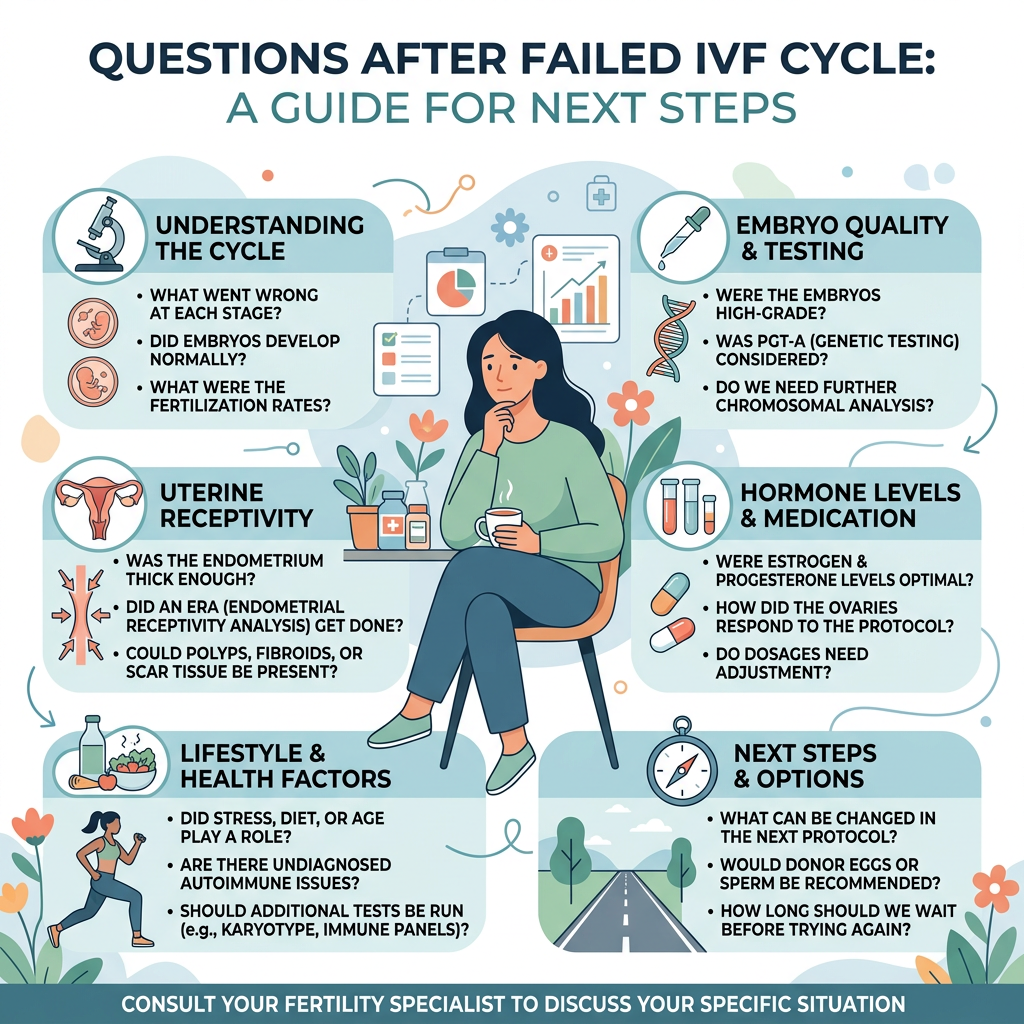
Experiencing a failed IVF cycle can feel emotionally devastating. After weeks or months of fertility treatment, IVF injections, monitoring appointments, embryo transfer, and waiting periods, receiving negative pregnancy results often brings grief, confusion, frustration, and emotional exhaustion. Many patients immediately begin wondering what went wrong and whether future IVF success is still possible.
While every IVF journey is different, a failed IVF cycle does not necessarily mean future fertility treatment will fail as well. Follow-up conversations with your fertility clinic can provide valuable information about your cycle and help guide next steps.
This guide covers important questions to ask after a failed IVF cycle, how to process IVF disappointment, and what to discuss with your fertility doctor moving forward.
Understanding Failed IVF Cycles
A failed IVF cycle may refer to:
- No implantation after embryo transfer
- Chemical pregnancy
- Poor embryo development
- Failed fertilization
- No viable embryos
- Cancelled IVF cycles
- Pregnancy loss after IVF
The emotional impact of failed fertility treatment can be significant regardless of the stage where the cycle ended.
Many women experience:
- Shock
- Sadness
- Anger
- Self-blame
- Anxiety about future IVF attempts
Before focusing on next steps, it is important to allow space for emotional recovery.
Why Follow-Up Appointments Matter After IVF Failure
After a failed IVF cycle, fertility clinics often schedule a consultation to review:
- Embryo development
- Hormone levels
- IVF protocols
- Egg retrieval outcomes
- Transfer details
- Possible next steps
This conversation can help patients better understand:
- What happened during the cycle
- Whether adjustments may help
- Which additional tests may be considered
Asking questions during this meeting can help you feel more informed and empowered moving forward.
1. What Do You Think Happened During My IVF Cycle?
One of the most common questions after failed IVF is simply asking your fertility doctor for their overall assessment.
Helpful follow-up topics include:
- Was implantation likely attempted?
- Were there concerns about embryo quality?
- Were hormone levels appropriate?
- Did the uterine lining appear receptive?
Sometimes there is no clear explanation for IVF failure, which can feel emotionally difficult but is unfortunately common in fertility treatment.
2. How Did My Embryos Develop?
Embryo development plays a major role in IVF outcomes.
Questions about embryo quality may include:
- How many embryos reached blastocyst stage?
- What were the embryo grades?
- Did embryo growth slow at any point?
- Were embryos frozen or transferred?
Understanding embryo development may help guide future IVF planning.
3. Should We Consider PGT-A Testing?
Some patients ask whether preimplantation genetic testing (PGT-A) may be helpful in future cycles.
PGT-A testing evaluates embryos for chromosomal abnormalities before transfer.
Questions to ask include:
- Would genetic testing make sense for my situation?
- Could embryo genetics have contributed to IVF failure?
- What are the benefits and limitations of PGT-A?
Not every patient needs PGT-A testing, so recommendations vary depending on age, diagnosis, and treatment history.
4. Was My Uterine Lining Appropriate for Transfer?
Successful implantation depends partly on the uterine environment.
Questions about the uterine lining may include:
- Was my lining thick enough?
- Did the lining pattern look ideal?
- Should additional uterine testing be considered?
- Could inflammation or polyps be affecting implantation?
Some patients may undergo further uterine evaluation after failed IVF cycles.
5. Do You Recommend Additional Testing?
After IVF failure, fertility clinics may sometimes suggest additional testing depending on medical history and prior outcomes.
Possible tests may include:
- Hysteroscopy
- Saline ultrasound
- Endometrial biopsy
- Recurrent implantation failure testing
- Hormonal evaluations
- Immune or clotting assessments in select cases
It is reasonable to ask:
- Which tests are evidence-based?
- Which tests are optional?
- How would results change treatment plans?
6. Should My IVF Protocol Change Next Time?
Not every IVF protocol works equally well for every patient.
Questions about future IVF adjustments may include:
- Should medication doses change?
- Would a different stimulation protocol help?
- Should we try frozen embryo transfer instead?
- Would additional supplements or medications help?
Small protocol changes may sometimes improve future IVF response.
7. Was Egg Quality or Sperm Quality a Concern?
IVF outcomes may be influenced by:
- Egg quality
- Sperm quality
- Fertilization rates
- Embryo development patterns
Questions may include:
- Were fertilization rates normal?
- Were there concerns about egg maturity?
- Was sperm quality affecting embryo growth?
Understanding these factors may help guide future fertility treatment decisions.
8. What Are My Chances With Another IVF Cycle?
One of the most emotional questions after failed IVF is whether future treatment still offers hope.
Your fertility doctor may discuss:
- Age-related fertility factors
- Embryo development trends
- Overall prognosis
- Alternative treatment approaches
While no doctor can guarantee IVF success, many patients do achieve pregnancy after previous failed cycles.
9. Should We Take a Break Before Another IVF Cycle?
After failed fertility treatment, many patients feel emotionally exhausted.
Questions about timing may include:
- Is it medically safe to try again immediately?
- Would a mental health break help?
- Should hormone levels recover first?
There is no universally correct timeline. Some patients prefer continuing quickly, while others need emotional recovery time first.
10. Are There Lifestyle Changes Worth Considering?
Patients sometimes ask about:
- Nutrition
- Sleep
- Stress management
- Supplements
- Exercise
- Weight management
While lifestyle changes alone cannot guarantee IVF success, improving overall health may support well-being during future fertility treatment.
Emotional Questions Matter Too
Medical questions are important, but emotional recovery matters equally after IVF failure.
Consider asking yourself:
- What kind of emotional support do I need right now?
- Do I want counseling or support groups?
- How am I coping mentally?
- What boundaries do I need with others?
Failed IVF cycles can affect:
- Mental health
- Relationships
- Self-esteem
- Daily functioning
Emotional care is an important part of fertility treatment.
What Not to Do After Failed IVF
After unsuccessful IVF cycles, many patients immediately:
- Blame themselves
- Obsess over symptoms
- Search endlessly online
- Compare outcomes with others
It is important to remember:
- IVF failure is rarely caused by one mistake
- Implantation is incredibly complex
- Many factors remain outside personal control
Being compassionate with yourself during this stage matters deeply.
Final Thoughts on Failed IVF Cycles
A failed IVF cycle can feel heartbreaking and emotionally overwhelming, but asking thoughtful questions during follow-up appointments may help provide clarity, direction, and hope for future treatment decisions.
Remember:
- Failed IVF is not your fault
- Many patients need multiple cycles
- Follow-up conversations can guide next steps
- Emotional recovery matters too
- You deserve support throughout fertility treatment
Most importantly, allow yourself time to process the experience emotionally. Fertility treatment can carry enormous emotional weight, and taking care of your mental health after a failed IVF cycle is just as important as planning future medical steps.
Leave a Reply